
The iconic male tiger, admired by thousands of tourists and feared by rivals, reportedly died after a fierce clash in the Khitauli range. Bandhavgarh National Park has lost one of its most recognizable and beloved tigers. Pujari (priest in English) , the majestic male who ruled hearts as much as territories , is believed to have died following a violent territorial clash with D1, another dominant male from the Khitauli range. Tourist guides noticed his sun-salutation poses at water bodies and a priest like calm in the cat, giving him the moniker. For wildlife lovers and regular visitors to Bandhavgarh, the news marks the end of an unforgettable chapter in the park’s rich tiger history. Several WhatsApp groups of tourists, guides, and wildlife enthusiasts have been flooded with tributes to the iconic tiger. While many stories circulating after Pujari’s death may not fully conform to scientific wildlife interpretations, they reflect the immense popularity of the big cat and t...
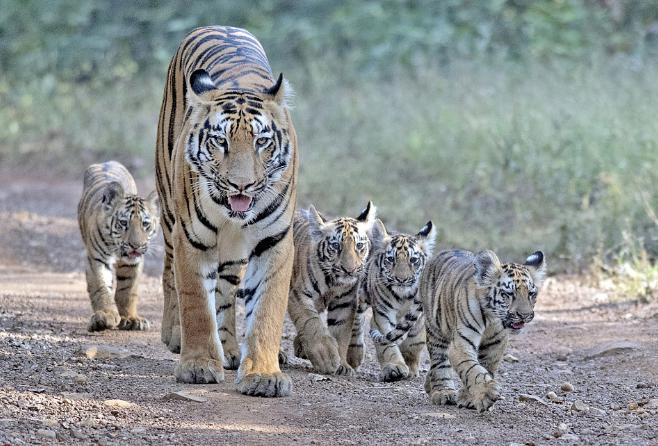
A railway project is all set to threaten a tiger corridor and a national park. Death of a breeding tigress by a fast moving train risking the life of her four cubs has highlighted the linear project in Madhya Pradesh. The tigress was killed in Sanjay Dubri national park by a running train where the Union environment ministry has already exempted the project of doubling of tracks from the process of seeking green clearances. There is a simple solution to stop further devastation. Shift the project outside the tiger reserve. For this the Railways may have to spend extra money but it is nothing if we take into consideration the forest ecosystem services of purification of air and water, mitigation of droughts and floods, generation and preservation of soils and renewal of their fertility. The government must reset its priorities.
Ecological Hotspot All Set To Be Ravaged By Railways
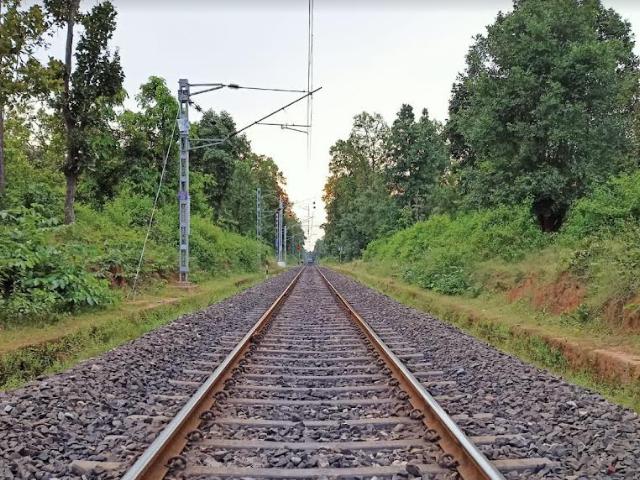
A speeding train running through the core area of Sanjay Dubri tiger reserve hit the tigress while the big cat was crossing the track. As the tigress was hit from the back, her tailbone and one of the back legs were broken. Post mortem performed on March 18 also revealed there was a lot of internal bleeding leading to death. Though this is the first tiger death on the railway track, as many as 50 wild animals including bear and hyena had died during the last 12 years. After her death, the four small cubs had been missing. A wildlife paradise, Sanjay Dubri national park is located in Sidhi district of MP housing as many as 22 tigers and 14 cubs. Birthplace of Mohan, the famous white tiger of erstwhile Rewa state, this reserve is an important tiger corridor and part of the Bandhavgarh-Sanjay-Guru Ghasidas-Palamau landscape of over 25000 sq km with a current tiger population estimate of 74 tigers.
Also read: Tiger Corridor : Now Satpuda Melghat National Parks Connectivity At Risk
It has been identified as one of the four potential tiger meta-population landscapes whose corridor connectivity has become fragile requiring intervention of policy and restoration for functioning as effective wildlife corridors. Apart from tigers, the reserve also provides shelter to wild elephants that frequent the Mohan range. The entire area along with the surrounding forests and the connectivity has a tremendous potential to become an important source population of tigers. But the railway project has jeopardized the paradise of Sanjay Dubri. There is already a 52 year old railway track right inside the national park covering 29 kms of the jungle. This includes over 27 km long railway track inside the core area of the tiger reserve. A train while running on the same track had killed the tigress T-18 on March 17. Now the Indian railways intend to expand the track by laying another track parallel to this existing railway line .
Centre Already Cleared The Project

The Union ministry of Environment exempted 13 pending railway projects including the one in Sanjay Dubri , worth about Rs 19,400 crore ($2.8 billion) and spread over 800 hectares of land, from the process of seeking forest green clearances These clearances are all set to adversely affect the jungles across the states of Uttar Pradesh, Madhya Pradesh, Karnataka and Goa. The railway ministry led by the then minister of railways Piyush Goyal, argued that this land was owned by the railways before 1980, the year the Forest (Conservation) Act (FCA), was passed, and so the Act did not apply to this land, according to railway and environment ministry documents accessed by IndiaSpend under the Right to Information Act. The Forest (Conservation) Act of 1980 prohibits the use of any forest land for non-forest activities without prior approval of the central government. This process is known as the ‘forest clearance’, or FC process, in common parlance.
The State wildlife Board in Madhya Pradesh had already cleared the project. In May 2019, the environment ministry issued a circular to all state governments that the FCA, 1980, would not apply for doubling of track and gauge conversion projects, if the land belongs to the railways and was under non-forest use prior to 1980. Projects involving the construction of new lines would still need to apply for forest clearance. If the 261 km Katni-Singrauli line is doubled, 33 km will pass through the Sanjay Dubri National Park in Madhya Pradesh, and will also disturb the tiger and elephant corridors connecting Bandhavgarh with the national park. For this over 14000 trees would have to be felled. In July 2017, the National Tiger Conservation Authority told the railway ministry that 250 km of railway lines, including the Katni- Singrauli line, pose a high degree of threat to critical tiger habitats.
Land With Railways, Neither Transferred Nor Denotified

In 1969, when the railway track was laid down, the railways also purchased the land. Though the railways owned the land, it was neither transferred to Indian Railways nor was it de-notified, forest department sources claimed. Few years later in the early eighties , two sanctuaries – Sanjay Gandhi wildlife sanctuary and Dubri sanctuary came into existence and later both were combined to form a tiger reserve in 2006. Right from the beginning, there has been a demand by the forest department to shift the railway track outside the park. In the absence of any under or over passes along the tracks, wild animals have been killed regularly from the trains including three passenger trains and one long-goods train comprising as many as 120 bogies.
Also read: Avni's killing: Core Issue of Tiger Corridors Lost in Oblivion
Laden with coal, the train is pulled by three engines and takes more than 2 hours to cross the forest . As it blows horns, screeches, rattles and rumbles pass across the jungle , the wild-animals run for their life. The forest department requests the railways to take both the tracks outside the jungle from Madwah to Majhauli stations. National wildlife board has constituted a committee comprising officials of National Tiger Conservation Authority, Wildlife Institute of India (WII) and Additional Principal Conservator of Forest (APCCF) Wildlife from MP.
Representational banner image: courtsey CGTN, Amrut Naik/Solent News.Other Pics Courtsey: Sanjay Dubri national park
Comments
Post a Comment